
University life is expensive enough. Your food doesn’t have to be. These tried-and-tested recipes prove that eating well on a shoestring is not only possible — it’s genuinely delicious.
“University taught me how to write an essay at 2am on four hours of sleep. It also taught me — through sheer desperation — how to make a filling, flavourful meal from almost nothing.”
Why Student Food Gets a Bad Rap
Let’s be honest: the clichés exist for a reason. Pot Noodles eaten cold over a textbook. Own-brand cereal for dinner. Toast — always toast. Most students don’t arrive at university knowing how to cook, and the combination of a tiny kitchen, no money, and zero free time turns cooking into an afterthought.
But here’s the thing: cheap, easy cooking doesn’t have to mean sad, flavourless food. The UK’s supermarkets — particularly Aldi, Lidl, and the basics ranges at Tesco and Sainsbury’s — are absolutely stacked with affordable ingredients that form the foundation of some of the world’s most beloved cuisines. Think dal, fried rice, pasta e ceci, shakshuka. These aren’t fancy dishes. They’re peasant food, in the best possible sense. Invented by people who had very little and needed to stretch it as far as it would go.
This post is your guide to doing exactly that. We’ll cover essential pantry staples, give you a handful of genuinely great recipes all coming in under £3 per serving, and share the tips and tricks that’ll make your food budget go further than you thought possible.
Stock Your Pantry Like a Pro
The secret to cheap, fast cooking is having a well-stocked pantry. These are the ingredients you buy once and use again and again. Most can be found at Aldi or Lidl for a fraction of the big supermarket price. Get these in early in term and your weekly food shop drops dramatically.
- Dried pasta (any shape)
- Basmati or long-grain rice
- Red lentils
- Tinned chickpeas
- Tinned chopped tomatoes
- Coconut milk (tinned)
- Soy sauce
- Olive or vegetable oil
- Garlic (bulb or paste)
- Cumin and ground coriander
- Smoked paprika
- Stock cubes (veg or chicken)
- Dried chilli flakes
- Plain flour
- Eggs
- Frozen peas and sweetcorn
Shopping tip: Always check the per-100g price, not the overall price. Supermarket own-brand spices are often 80% cheaper than Schwartz or similar, and taste identical. Aldi’s 50p spice jars are legendary among budget cooks.
Speedy Weeknight Meals (Under 20 Minutes)
These are your weeknight weapons. Fast, filling, cheap, and — crucially — using skills that won’t overwhelm a complete beginner. If you can boil water and stir a pan, you can make every single one of these.
Aglio e Olio — approx. £0.60 per serving
The Roman classic: pasta, garlic, olive oil, and chilli. Impossibly simple, impossibly good. Rome’s answer to “there’s nothing in the fridge.” Ready in 15 minutes.
Shakshuka — approx. £1.20 per serving
Eggs poached in a spiced tomato sauce. Serve straight from the pan with bread. Tastes like something from a café; costs less than a bus fare. Ready in 20 minutes.
Egg Fried Rice — approx. £0.80 per serving
The ultimate leftover hack. Yesterday’s rice becomes today’s dinner with two eggs, soy sauce, frozen peas, and five minutes over high heat.
Elevated Beans on Toast — approx. £0.55 per serving
Add a fried egg, a slick of hot sauce, and smoked paprika to the humble classic and it becomes something genuinely craveable. On the table in 8 minutes.
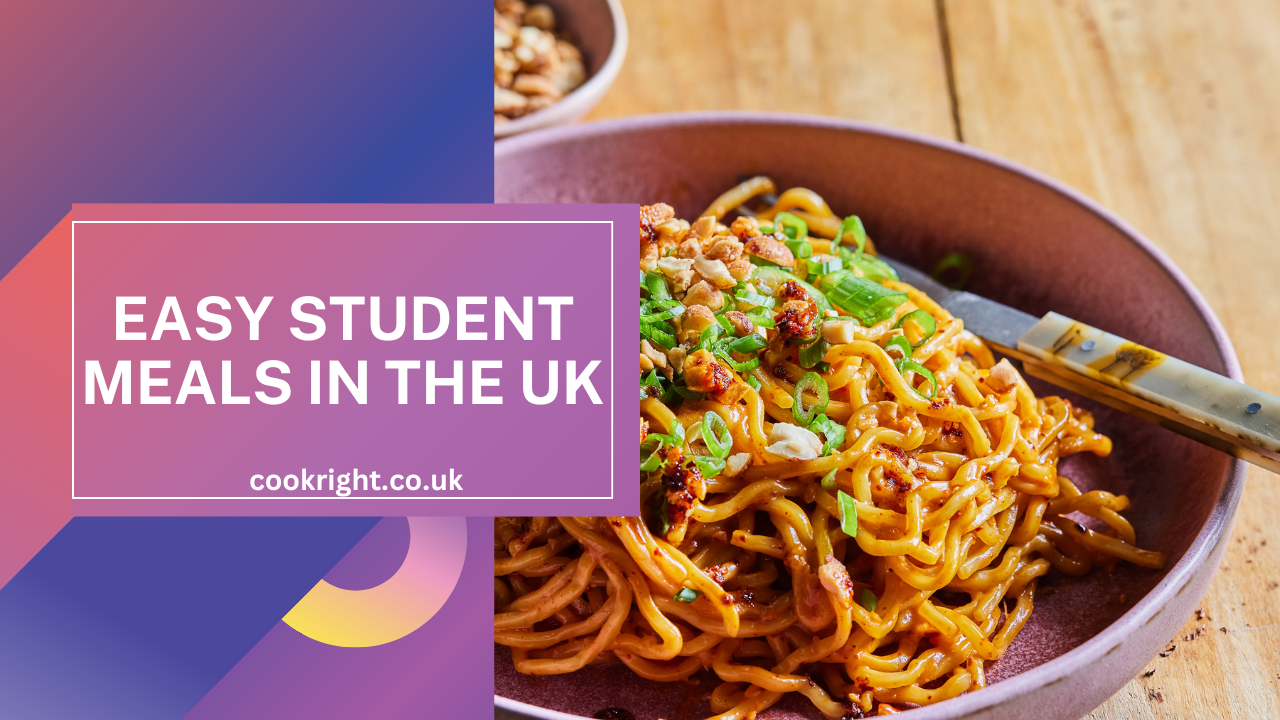
Peanut Noodles — approx. £1.10 per serving
Peanut butter, soy sauce, lime juice, garlic, and chilli blitzed into a sauce over noodles. Cold or hot, it’s brilliant every time. Ready in 12 minutes.
Quesadillas — approx. £1.40 per serving
Cheese, beans, and whatever veg needs using up, folded into a flour tortilla and fried crispy. Infinitely customisable, endlessly satisfying.
Deep Dive Recipe #1: Red Lentil Dal
If there’s one recipe that every student should know by heart, it’s dal. Made from red lentils — among the cheapest protein sources you can buy — fragrant with spices, and ready in 30 minutes, it’s the dish that will carry you through the hard weeks of term. It also freezes beautifully: make a big batch on Sunday and you’ve got lunches sorted for days.
Total cost for 4 servings: approximately £2.80 (70p per serving)
Ingredients (serves 4)
- 250g red lentils (~70p)
- 1 tin chopped tomatoes (~35p)
- 1 onion (~20p)
- 3 garlic cloves (~10p)
- 1 tsp ground cumin
- 1 tsp ground coriander
- ½ tsp turmeric
- ½ tsp chilli flakes
- 1 vegetable stock cube (~5p)
- 1 tbsp oil
- Salt and pepper
- Rice to serve (~30p)
Method
- Dice the onion and fry in oil over medium heat for about 8 minutes until soft and golden. Don’t rush this — properly cooked onion is the base of flavour.
- Add the garlic (crushed or from a tube) and all the spices. Fry for 60 seconds, stirring constantly. You’ll smell when it’s ready.
- Tip in the rinsed lentils and chopped tomatoes. Add 700ml of water with a crumbled stock cube. Stir well.
- Bring to a boil, then reduce to a gentle simmer for 20–25 minutes, stirring occasionally, until the lentils have broken down into a thick, porridge-like consistency.
- Season generously with salt. Serve over rice, with bread, or just as it is. A squeeze of lemon juice lifts the whole thing.
Level it up: Add a tin of coconut milk instead of some of the water for a creamier, richer version. Stir in a handful of spinach at the end. Top with a fried egg. Chuck in leftover veg. Dal forgives everything.
Deep Dive Recipe #2: One-Pot Tomato Pasta
This is the laziest good pasta recipe in existence, and we mean that as the highest compliment. Everything — including the uncooked pasta — goes into one pot. The starchy pasta water thickens into a silky sauce. You do less washing up. Everyone wins.
Total cost for 2 servings: approximately £1.40
Ingredients (serves 2)
- 180g spaghetti or penne (~20p)
- 1 tin chopped tomatoes (~35p)
- 3 garlic cloves, sliced (~10p)
- ½ onion, sliced (~10p)
- 1 tsp dried oregano
- ½ tsp chilli flakes
- 500ml water
- 1 tbsp oil
- Salt and pepper
- Any hard cheese to top (~20p)
Method
- Put everything — pasta, tinned tomatoes, sliced onion, garlic, spices, oil, and a good pinch of salt — into a large saucepan. Add the water.
- Bring to a boil over high heat, then reduce to a vigorous simmer. Cook for 9–12 minutes, stirring frequently, until the pasta is al dente and the sauce has thickened considerably.
- If the sauce looks too thick, add a splash of water. If too watery, cook another minute or two. Taste and adjust salt.
- Serve immediately, topped with whatever cheese you have. Cheddar works fine. Parmesan is great. Nutritional yeast makes it vegan.
Deep Dive Recipe #3: Spiced Chickpea Wraps
Chickpeas are the unsung hero of student cooking. A 400g tin costs around 35–50p, contains more protein than you’d expect, and takes on flavour brilliantly. These wraps come together in 15 minutes and are genuinely satisfying — the kind of food that doesn’t feel like “budget cooking” at all.
Total cost: approximately £2.50 for 2 generous wraps
Ingredients (makes 2 wraps)
- 1 tin chickpeas, drained (~45p)
- 2 flour tortillas (~30p)
- ½ tsp smoked paprika
- ½ tsp ground cumin
- ¼ tsp garlic powder
- 1 tbsp oil
- ½ lemon or lime (~20p)
- Plain yoghurt or mayo (~20p)
- Any salad veg you have (lettuce, tomato, cucumber)
- Hot sauce (optional)
Method
- Drain and pat dry the chickpeas. Fry in oil over high heat for 5–6 minutes, shaking the pan, until they start to crisp up at the edges.
- Add all the spices and a good pinch of salt. Toss and cook for another 2 minutes until fragrant. Squeeze over lemon juice off the heat.
- Warm your tortillas in a dry pan or microwave. Spread with yoghurt, pile in the chickpeas, add any salad veg, and drizzle with hot sauce.
- Roll, fold, and eat immediately. The spiced chickpeas on their own keep in the fridge for 3 days.
More Budget Recipes at a Glance
Beyond the deep-dives above, here are six more recipes worth adding to your repertoire. All come in under £2.50 per serving and require only basic kitchen equipment.
Tomato and Lentil Soup — approx. £0.65 per serving
Onion, garlic, red lentils, tinned tomatoes, and stock. Blend half for a thick, warming soup. Serves four from one pot and is ideal for batch cooking. Ready in 25 minutes.
Loaded Jacket Potato — approx. £1.00 per serving
The microwave jacket potato is an underrated skill. Pierce, microwave for 8 minutes, top with beans, cheese, or leftover dal. A true student institution. Use the oven for 50 minutes if you have time for a crispier skin.
Coconut Sweet Potato Curry — approx. £1.80 per serving
Sweet potato, coconut milk, tinned tomatoes, curry powder, and garlic. Naturally vegan, naturally delicious. Serve with rice. Ready in 30 minutes.
Savoury Porridge — approx. £0.40 per serving
Oats cooked in vegetable stock instead of milk, topped with a fried egg and a dash of soy sauce. Strange sounding? Yes. Brilliant? Absolutely. A game-changing breakfast-for-dinner that costs almost nothing.
Veggie Stir-Fry — approx. £1.50 per serving
Whatever veg is in the fridge, thrown into a hot pan with soy sauce, garlic, and a splash of sesame oil. Serve over noodles or rice. Ready in 15 minutes.
Overnight Oats — approx. £0.50 per serving
Oats, milk (or water), a sliced banana, and peanut butter in a jar. Leave overnight in the fridge. Free breakfast in the morning that takes 2 minutes to prepare the evening before — and far better than skipping it.
Money-Saving Strategies That Actually Work
Cook once, eat three times
Batch cooking is the single biggest difference between struggling with your food budget and thriving. A pot of dal, a tray of roasted veg, a big batch of rice — cooked on a Sunday evening — cuts your cooking time and food spend dramatically for the rest of the week. Invest in a few microwave-safe containers and your future self will thank you.
Learn to love the freezer
Bread going stale? Freeze it. Bananas going brown? Peel and freeze them for smoothies or banana bread. Leftover dal, curry, soup, or stew? Freeze it in portions and you’ve created your own ready meals for free. The freezer is the student cook’s best friend and is criminally underused in halls.
Shop the reduced section strategically
Most supermarkets reduce perishables between 5pm and 8pm. Yellow-sticker meat and fish can be frozen immediately. Yellow-sticker veg gets used that evening. Go in with a plan: if you find reduced chicken, make a stir-fry; if you find reduced vegetables, make soup. This approach can cut your meat costs by 50–70%.
Buy whole, not pre-prepared
Pre-cut vegetables, grated cheese, and pre-made sauces all carry a premium for someone else’s labour. A block of cheddar is almost always half the price of the same weight of grated cheddar. A whole butternut squash costs less than a bag of ready-cubed pieces. The knife skills you develop this year will save you money for the rest of your life.
Own-brand is almost always fine
We’ll say this plainly: supermarket own-brand tinned tomatoes, pasta, rice, lentils, soy sauce, and spices are functionally identical to branded equivalents in the context of cooking. The flavour difference in a finished dish — where you’re adding garlic, spice, acid, and heat — is negligible. Switching to own-brand across the board can cut your shop by 30% without any reduction in quality.
Don’t underestimate eggs
A box of 12 free-range eggs from Aldi costs around £1.69. That’s roughly 14p per egg. Eggs are complete protein, incredibly versatile, cook in under five minutes, and are the backbone of some of the best quick meals in the world — omelettes, fried rice, shakshuka, egg-fried noodles, frittatas. If your fridge has eggs, you are never truly without dinner.
Equipment You Actually Need
You do not need a stand mixer, a spiraliser, or a matching set of Le Creuset. You need these things — ideally sourced second-hand from a charity shop or Facebook Marketplace:
- One large saucepan with a lid
- One frying pan
- A sharp knife
- A chopping board
- A colander or sieve
- A wooden spoon
- A grater
- Microwave-safe bowls
- Tupperware or food containers for batch cooking
- Kitchen scales (optional but helpful)
If you’re in halls and sharing a kitchen, coordinate with flatmates. Pooling equipment means nobody needs to buy everything. Even better: cook together occasionally and split the cost of bigger batch meals. A pot of curry that costs £5 to make feeds four people for £1.25 each.
Nutrition on a Budget
It’s easy to eat cheaply. It’s slightly harder to eat cheaply and nutritiously. Here’s the short version of what you need and where to find it without spending more.
Protein: eggs, lentils, chickpeas, tinned beans, frozen edamame, own-brand tofu, tinned fish (tuna, sardines, mackerel — all excellent value). Meat doesn’t have to disappear from your diet, but it doesn’t need to be the centrepiece of every meal.
Carbohydrates: rice, pasta, oats, bread, and potatoes. These are the cheapest calories available and the backbone of any student diet. Don’t be afraid of them.
Vegetables: frozen vegetables are your secret weapon. Nutritionally equivalent to fresh — often better, since they’re frozen at peak ripeness — dramatically cheaper, and they don’t go off. A 1kg bag of frozen peas, sweetcorn, or spinach costs under £1.50 and lasts weeks.
Fats: olive oil, peanut butter, eggs, and the occasional tin of full-fat coconut milk. Don’t skip fat — it’s how your body absorbs certain vitamins and it’s what makes food taste good.
What’s a Realistic Weekly Food Budget?
If you follow the principles in this post — batch cooking, smart shopping, building a pantry — a realistic weekly food budget for a UK student is £15–25 per week for solid, nutritious, genuinely enjoyable meals. That works out to roughly £2–3.50 per day.
The key is front-loading your pantry spend in the first week or two of term. After that, your weekly shop gets significantly cheaper because the spices, oil, and dried goods are already there. You’re essentially just topping up fresh ingredients and tins each week.
You’ve Got This
Learning to cook well on a budget is one of the most genuinely useful things you can do at university — and unlike your degree, it’s a skill you’ll use every single day for the rest of your life.
Start with dal. Master the one-pot pasta. Get comfortable with eggs. The rest follows naturally. Save this page, share it with your flatmates, and remember: the best student meal is the one you actually make.